
Researchers have found that a mutation associated with autism may disrupt brain structure by disabling mitochondria, according to a study published in the journal Neuron. The study focused on a mutation in chromosome 22, which is associated with sparse connections between brain regions in mice. Mitochondria, the energy factories within cells, were found to be impaired in mutant mice, leading to damage to cells. However, treating the mutant mice with compounds that neutralize harmful chemicals restored brain connections and improved cognitive performance.
There is growing evidence suggesting a link between autism and mitochondrial dysfunction, not only in brain tissue but also in muscle tissue and white blood cells. This dysfunction may be particularly relevant to synaptic defects in autism, providing a potential mechanism for treatment. The findings of this study may only be applicable to the specific chromosome 22 mutation associated with autism.
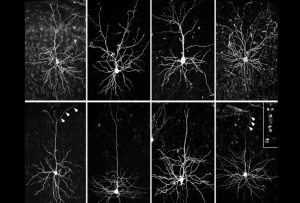
People with 22q11.2 deletion syndrome, who lack one copy of a segment containing 30 to 40 genes, are also more likely to have autism. Mice missing the same region show a reduction in the number of neurons in two layers of the cerebral cortex. These missing neurons have shorter axons and dendrites with fewer branches, potentially leading to fewer synapses in the mutant mice’s brains.
The mitochondria in the mutant mice’s neurons were found to be misshapen and contain an excess of harmful reactive oxygen species (ROS). The TXNRD2 gene, found within the 22q11.2 region, codes for an enzyme that neutralizes ROS. Silencing this gene in typical neurons resulted in increased ROS levels and shrinkage of axons and dendrites.
The recent findings highlight the importance of the TXNRD2 gene for both mitochondrial health and brain connections. Prior to this research, the gene was not well-studied. The gene is crucial for the degradation of ROS and the prevention of synaptic defects. An antioxidant that neutralizes ROS was found to improve executive function in mice and increase the length of axons and dendrites in brain tissue.
Causal evidence strongly suggests that reactive oxygen compounds play a significant role in the disruption of brain structure associated with the mutation. The next step for researchers is to determine if the antioxidant treatment can permanently fix abnormalities in young mice or if continuous treatment is necessary.