

 The autism gene TBR1 controls the expression of several other candidate genes that govern the architecture of the cerebral cortex, the brain’s outer section, a new study suggests1.
Scientists have discovered that the autism gene TBR1 may rewire the brain by altering the expression of other genes. The gene controls the expression of candidate genes that affect the architecture of the cerebral cortex. Mutations in TBR1 can disrupt gene expression, leading to altered brain circuits.
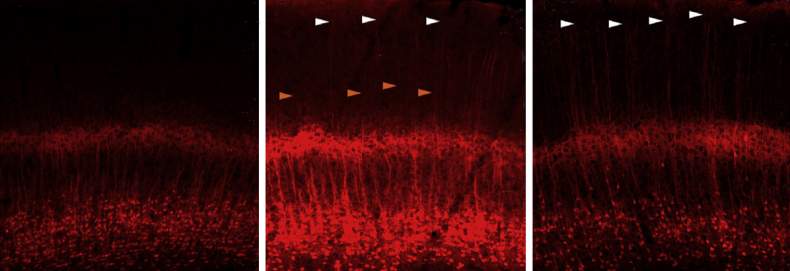
When TBR1 was disabled in layer 6 of the cerebral cortex in mice, it affected the wiring of neurons in that area. Restoring the expression of WNT7b, a gene controlled by TBR1, partially corrected circuit problems. Mutant mice lacking TBR1 showed altered gene expression in layers 5 and 6 of the cerebral cortex.
Researchers sequenced RNA transcripts and analyzed the expression of nine target genes in layer 6 neurons. They found that gene expression in the mutants resembled that of layer 5 neurons instead of typical layer 6 neurons. Mice lacking one copy of TBR1 showed less pronounced changes in gene expression.
TBR1 is active before birth in mice and is required to maintain cell type identity even after birth. The altered expression of certain genes in the mutants is associated with autism. TBR1 controls gene expression by binding to specific DNA regions that regulate these genes. The study revealed the relationships between autism genes and their impact on each other’s activity. In the mutant mice, the dendrites of layer 6 neurons extended to layer 1, which is atypical, and formed fewer connections with other neurons compared to typical layer 6 neurons.
Four genes that showed altered expression in the mutants are known to affect synapse formation. Researchers delivered functional versions of these four genes to mutant mice using viruses. One of the genes, WNT7b, restored the number of synapses to normal levels. This discovery could potentially lead to therapy for TBR1 type of autism.
Additionally, the drug D-cycloserine, which boosts neuronal activity, reversed social and cognitive problems in mice lacking one copy of TBR1, and researchers are interested in determining if it can also help alleviate problems in layer 6 mutants. However, the gene-expression changes and behaviors in the two types of mutants are different, raising questions about the relevance of the findings to autism.